
Dream of the Red Chamber – An Abridged English Retelling
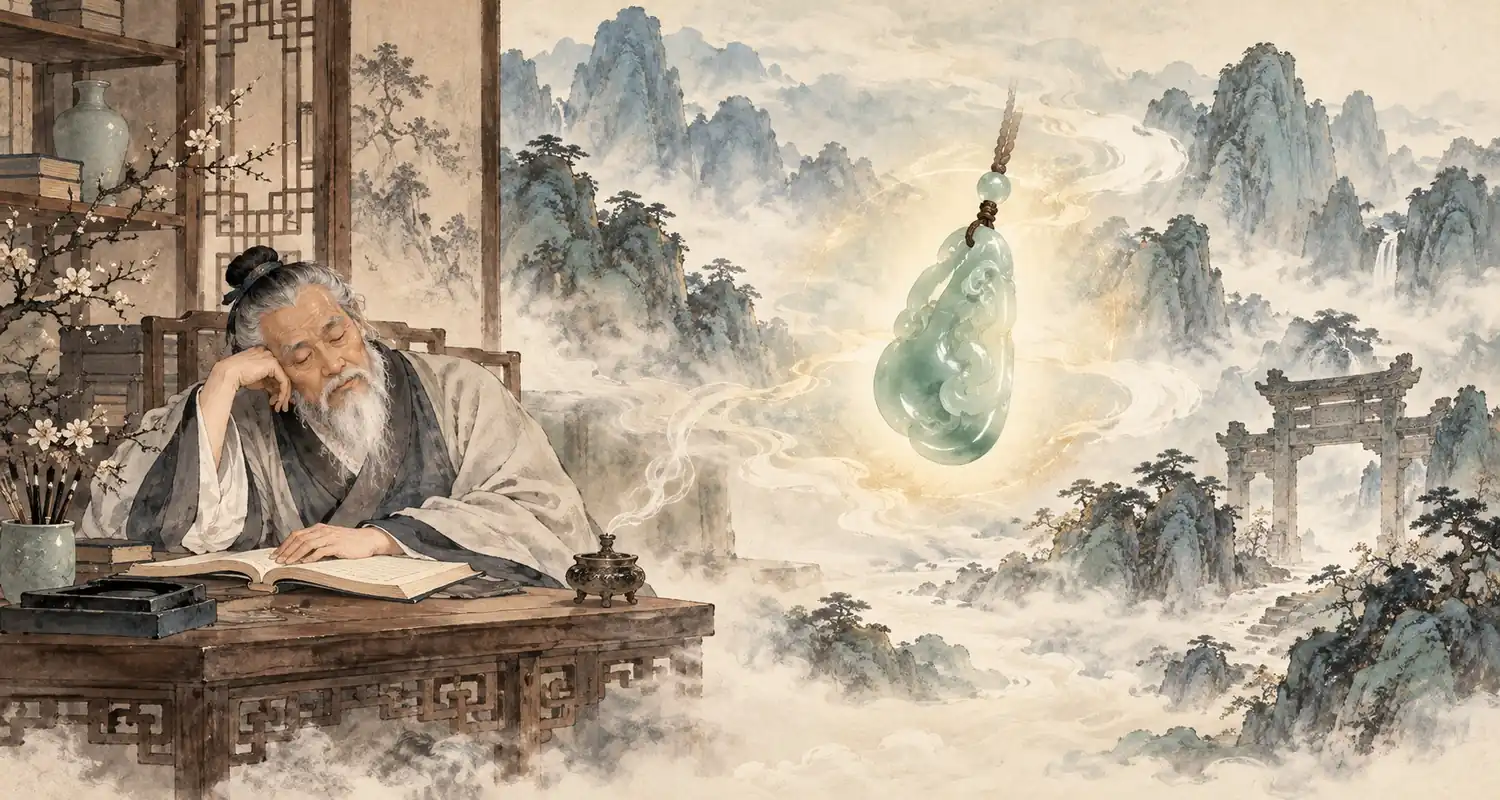
The Jia family builds a magnificent garden for an imperial visit. Its beauty gives Baoyu a chance to reveal his imagination, but Yuanchun’s homecoming also exposes the distance between public honor and private happiness.
About This Retelling
This is an abridged English retelling of Cao Xueqin’s Dream of the Red Chamber, based on the public-domain Chinese novel. It follows the main events while shortening descriptions and summarizing poems. HDNovel’s chapter numbers follow this reading sequence rather than the numbering of the original novel. This installment draws on Chapters 17-19 of the Chinese text.
A Garden Built for an Imperial Visit
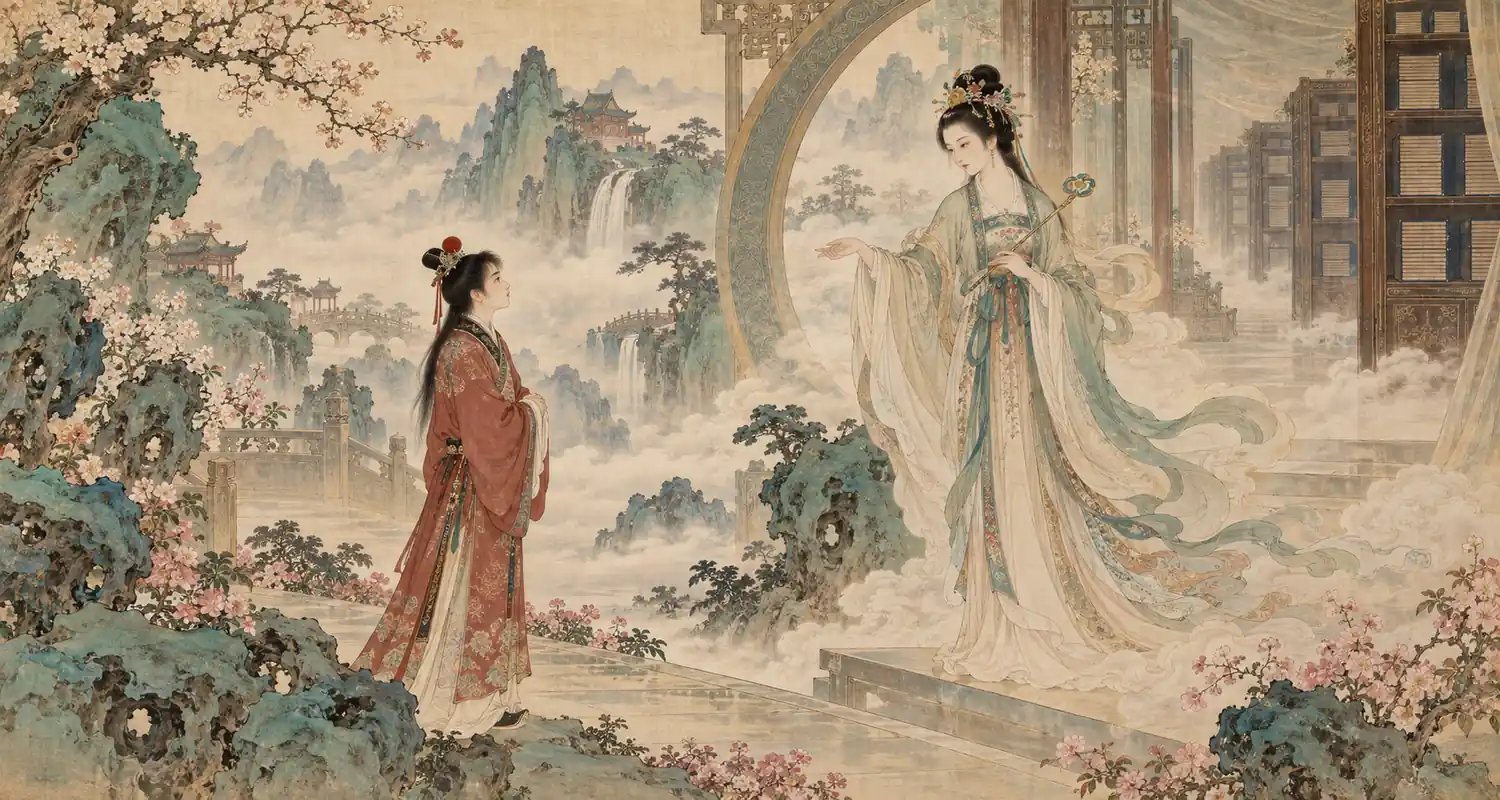
The Jia family has spared little expense in preparing for Yuanchun’s visit. Walls, waterways, bridges, halls, and planted landscapes have transformed adjoining grounds into a garden worthy of an imperial consort. Craftsmen imitate the beauty of the natural world, while the family plans every detail of the ceremony.
Before the visit, Jia Zheng walks through the grounds with a group of literary guests. Baoyu is brought along. His father intends to test him, and the boy quickly finds himself caught between admiration for the garden and fear of giving an answer that will provoke a reprimand.
The men propose names for the sights they encounter. Jia Zheng repeatedly asks Baoyu for his judgment. Although he scolds his son’s manner, the exercise reveals a sensitivity that conventional lessons have not drawn out.
Baoyu Finds Words for the Landscape
At a pavilion beside clear water, Baoyu thinks about the stream’s source rather than simply its surface. Among bamboo, flowering trees, rocks, and fragrant plants, he tries to find names that suit the character of each place. Literary allusions become a way of reading the landscape.
He also questions a rustic retreat that the guests admire. Its cultivated appearance does not convince him that it belongs naturally in its surroundings. The disagreement shows that he can distinguish an affecting scene from a decoration arranged to suggest one.
The guests praise his phrases and couplets, sometimes more freely than Jia Zheng would like. His father conceals approval behind criticism. Baoyu leaves the inspection without a clear sense of success, even though his words will help shape the garden’s identity.
Yuanchun Returns Home
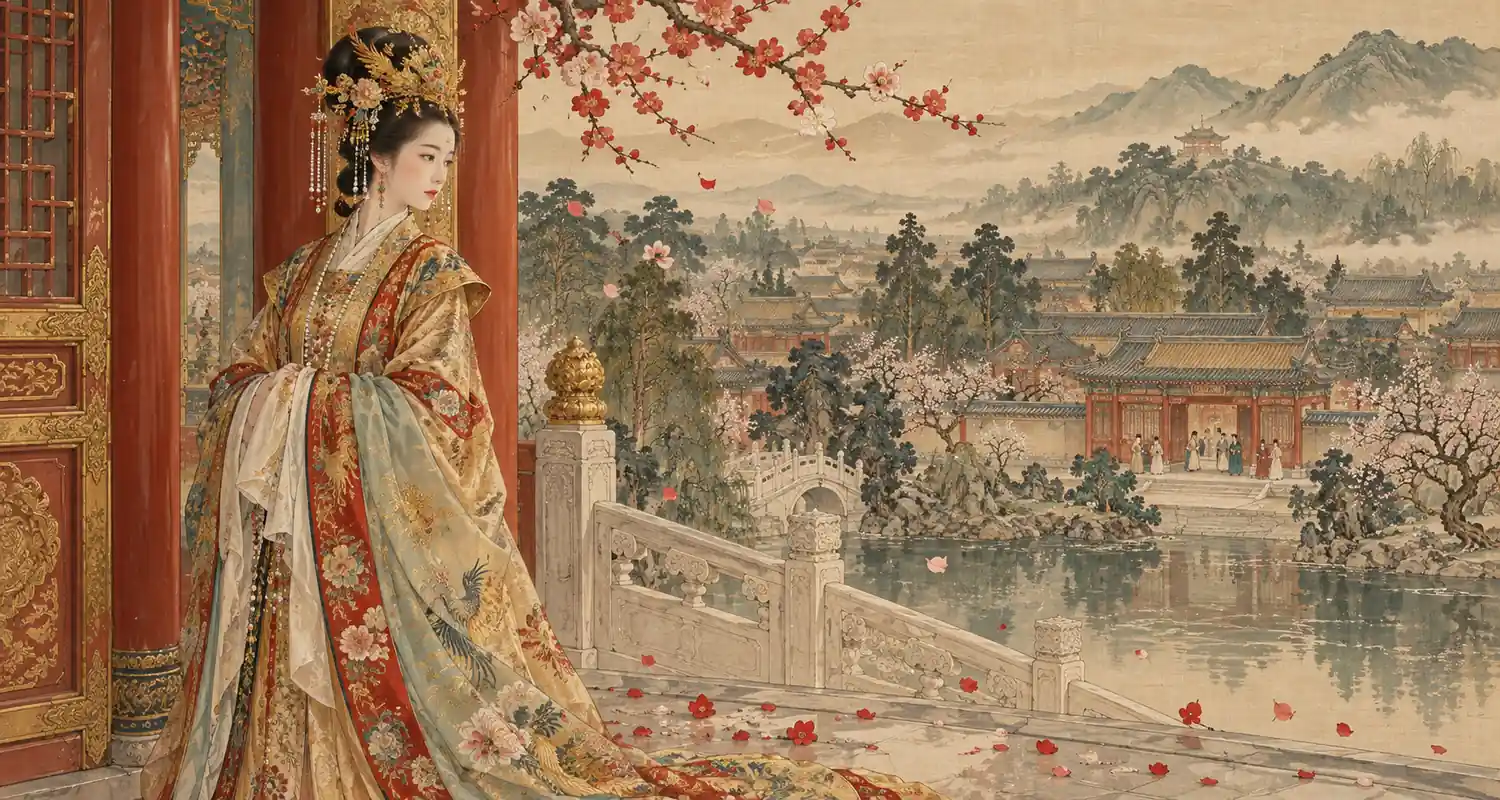
When the appointed night arrives, the grounds glow with lanterns. Servants and relatives wait according to carefully ordered ranks. Yuanchun enters amid imperial attendants and ceremonial formality, then travels through the illuminated garden prepared in her honor.
The richness of the display impresses her, but she also finds the expense excessive. What the household sees as a triumph of prestige cannot fully answer the feelings of the daughter who has been absent from home.
When she meets Grandmother Jia and Lady Wang, ceremony gives way to tears. The women cling to one another, painfully aware that the visit will be brief. Yuanchun’s position has raised her family’s standing while placing her beyond the ordinary comforts of family life.
Poems in the Grand View Garden
Yuanchun names the grounds the Grand View Garden and reviews the inscriptions prepared for its buildings and landscapes. She asks the younger members of the family to compose poems. The occasion brings private literary talent into a setting ruled by courtly expectations.
Baochai and Daiyu both write accomplished verses. Baoyu receives a more demanding task and must produce several poems. Baochai helps him avoid an awkward allusion, while Daiyu, eager to show what she can do, writes one of the assigned poems for him.
The poems celebrate the garden and the visit, but they also reveal the different minds at work within the household. Yuanchun praises the results, especially the literary ability of Baochai and Daiyu. Their talents flourish for a moment beneath the formal splendor.
The Hour of Departure
The family would like to prolong the gathering, but Yuanchun cannot decide her own departure time. Palace rules close in again. The joyful spectacle ends with another painful separation.
Before leaving, she gives instructions and gifts. The garden remains as a visible sign of her favor, yet its beauty cannot preserve the reunion itself. A space built to welcome her becomes a reminder of how seldom the family can see her.
The visit brings together two sides of the Jia household: public grandeur and intimate attachment. Each depends on the other, but they cannot be reconciled simply by spending more money or arranging a finer ceremony.
Xiren Tests Baoyu’s Affection
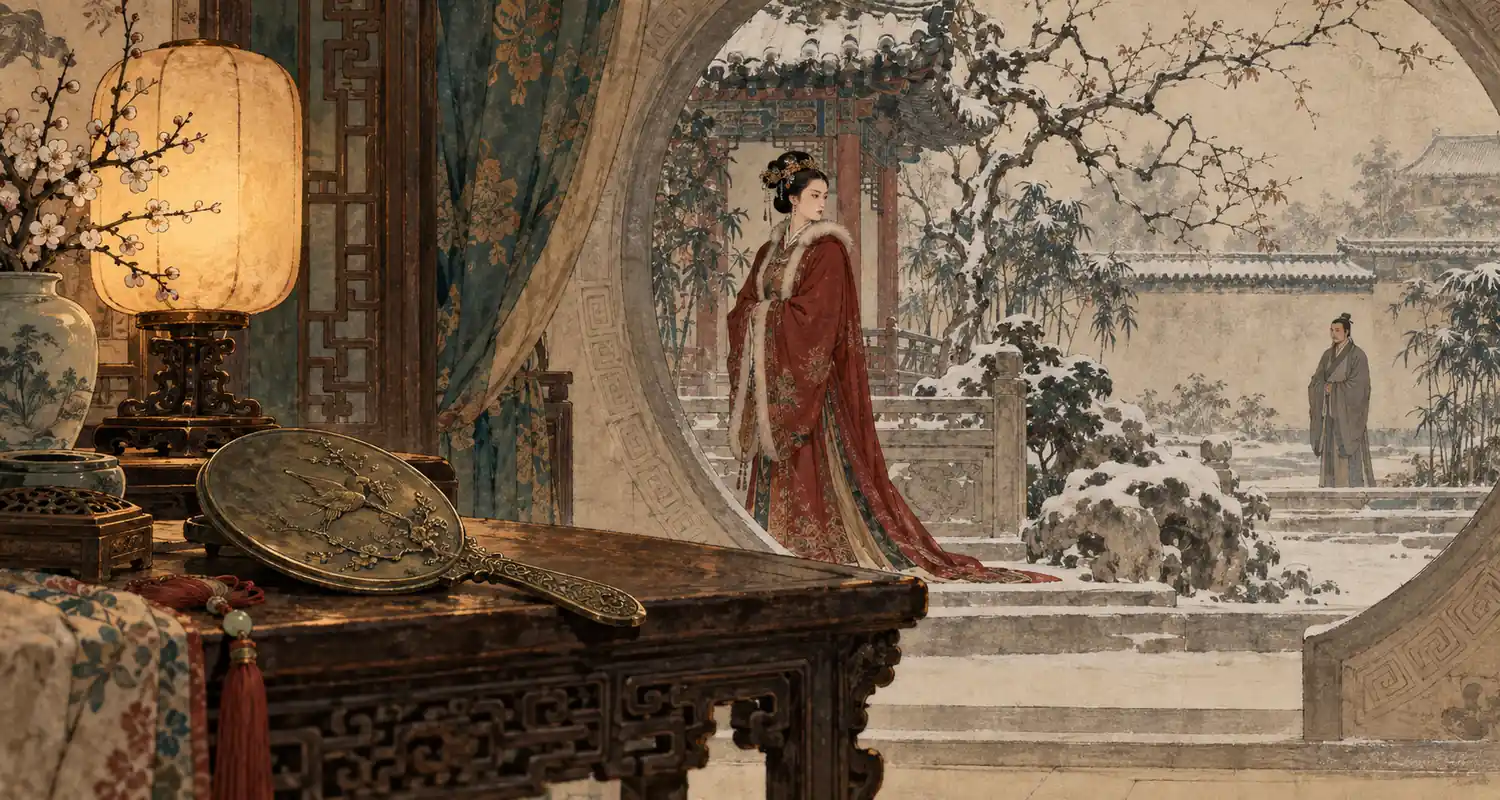
Later, Baoyu visits Xiren while she is at her family’s home. She matters to him far beyond the routine duties of an attendant. When she returns, she uses the possibility of being redeemed from service to test how strongly he wants her to stay.
Baoyu is distressed at the thought of losing her. Xiren makes her continued presence depend on promises: he must take greater care with his speech, show more willingness toward his studies, and curb habits that trouble the household.
Her strategy is affectionate but practical. She knows that his tenderness alone will not protect him from family expectations. In the quieter world after the imperial visit, concern for Baoyu takes the form of everyday advice rather than grand ceremony.
Chapter Summary
Baoyu helps name the new garden under Jia Zheng’s stern scrutiny. Yuanchun returns to her family for a brief ceremonial visit, praises the garden, and asks for poems. Her tears reveal the loneliness behind imperial rank. Later, Xiren tests Baoyu’s attachment to her and urges him to behave with greater care.
Character Notes
| Character | Role in This Chapter |
|---|---|
| Jia Baoyu | Reveals his literary sensitivity while facing his father’s criticism. |
| Jia Yuanchun | An imperial consort whose brief homecoming brings honor and sorrow. |
| Jia Zheng | Tests Baoyu’s learning and conceals approval behind stern correction. |
| Lin Daiyu | Displays her poetic talent and helps Baoyu with one of his poems. |
| Xue Baochai | Writes skillfully and offers Baoyu practical literary guidance. |
| Xiren | Uses Baoyu’s fear of losing her to encourage more careful behavior. |
Cultural Notes
- Grand View Garden: The garden is known in Chinese as Daguanyuan. Its spaces will become central to the lives of the younger characters.
- An imperial homecoming: A consort’s visit to her natal family was a privilege shaped by strict ceremonial limits. Yuanchun cannot stay as an ordinary daughter might.
- Poetry and place names: Literary allusions, inscriptions, and couplets help give each garden space a distinct identity. The poems here are summarized rather than presented as a complete verse translation.
- Redeeming an attendant: A servant’s family might seek to buy back her service. Xiren raises that possibility as a way to persuade Baoyu to change.