
Dream of the Red Chamber – An Abridged English Retelling
During a family celebration, Wang Xifeng visits the ailing Qin Keqing and encounters Jia Rui in the garden. He mistakes her calculated politeness for encouragement. His refusal to recognize the danger leads from humiliating appointments to a mysterious mirror and a final warning he will not obey.
About This Retelling
This is an abridged English retelling of Cao Xueqin’s Dream of the Red Chamber, based on the public-domain Chinese novel. It follows the main events while shortening descriptions and summarizing poems. HDNovel’s chapter numbers follow this reading sequence rather than the numbering of the original novel. This installment draws on Chapters 11-12 of the Chinese text.
Celebration and Illness
The Ningguo household prepared a birthday celebration for Jia Jing. Though the man being honored remained away pursuing his religious interests, the family received guests, arranged meals, and gathered for performances.
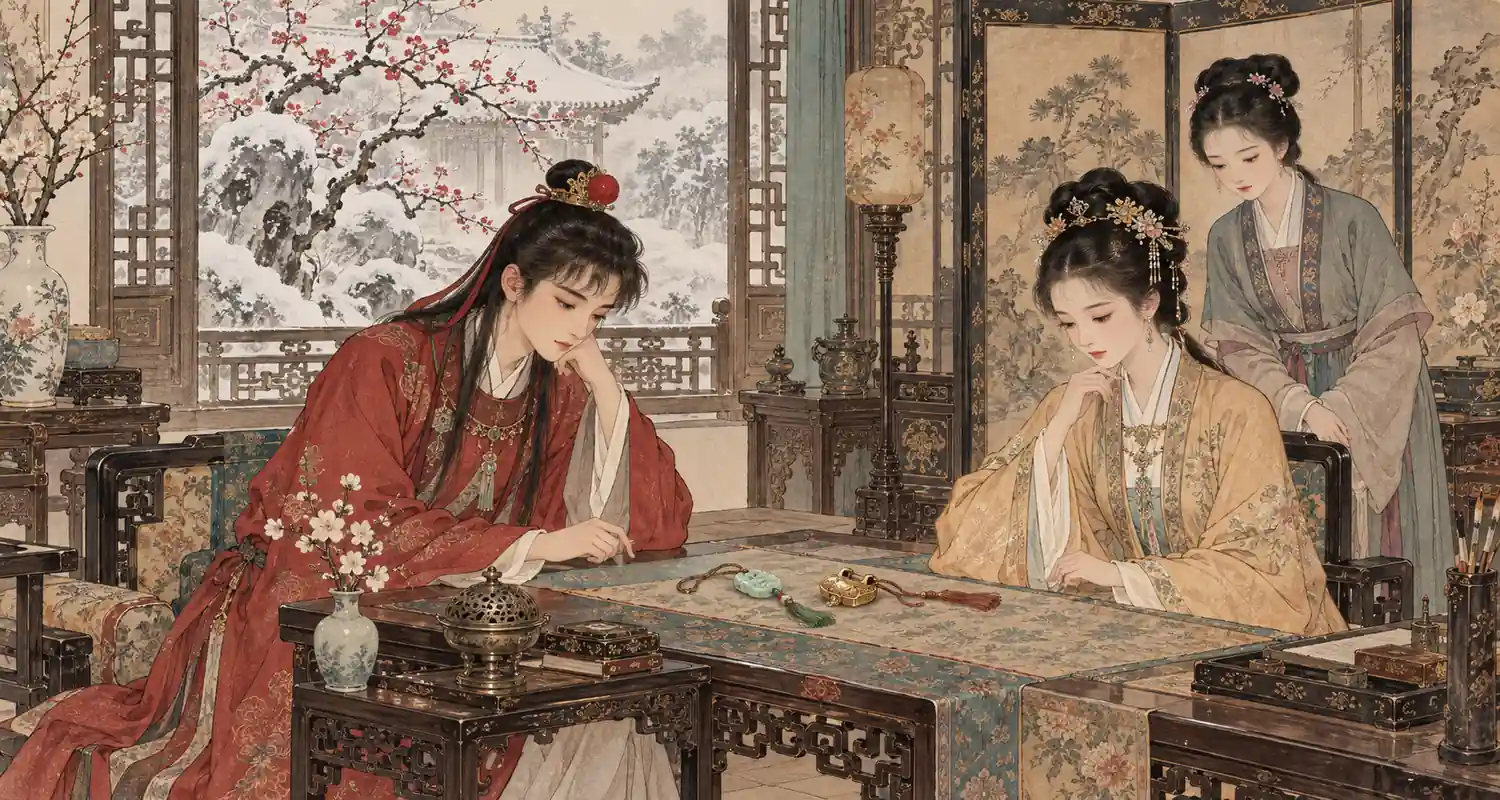
Behind the hospitality lay anxiety about Qin Keqing. Her illness had weakened her, and the household could find little reassurance in the doctors’ uncertain reports. Xifeng and Baoyu went to see her before joining the other guests.
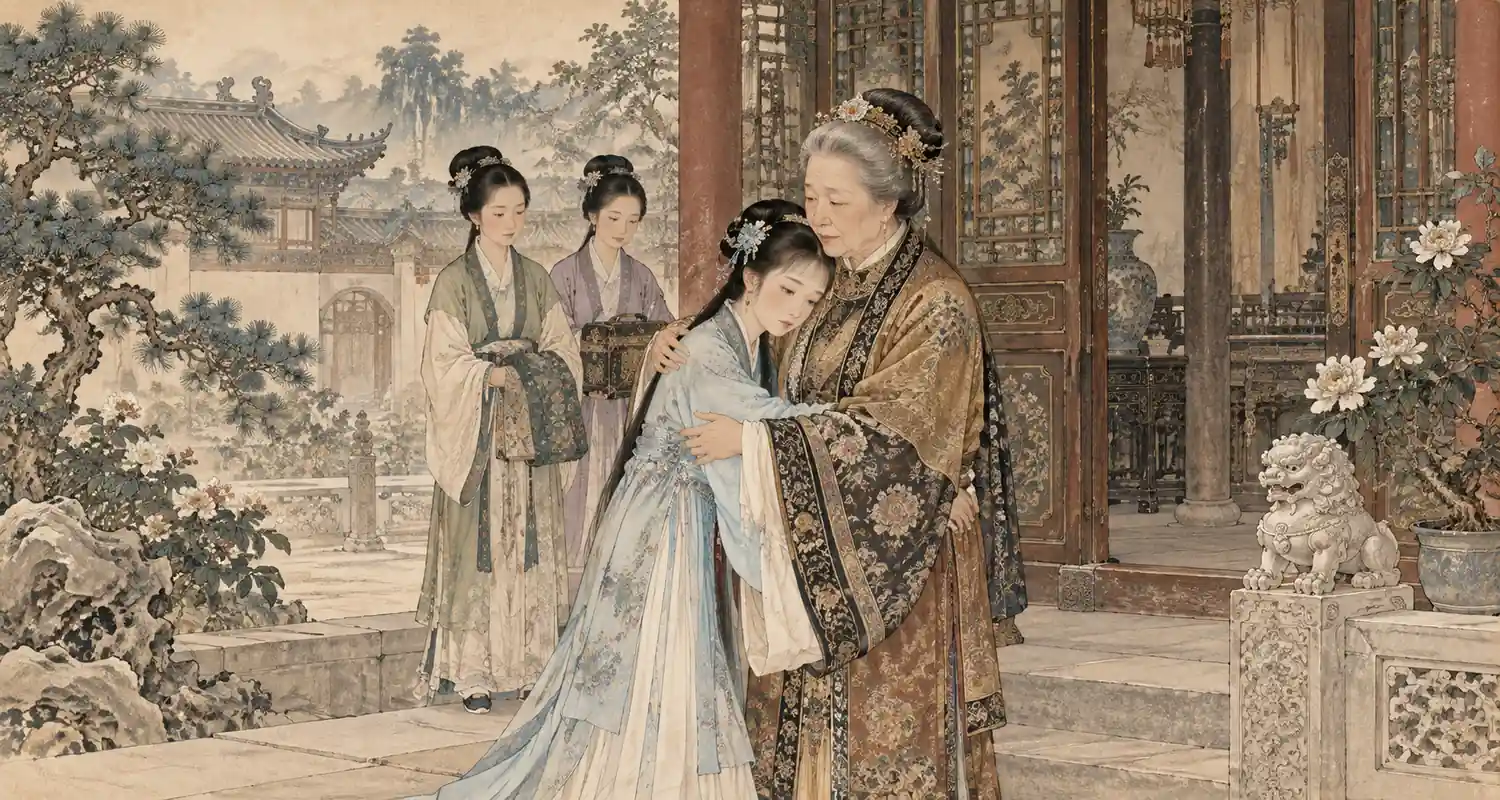
Qin Keqing spoke of the kindness she had received and the duties she feared she could no longer fulfill. Baoyu was moved to tears. Xifeng tried to encourage her, then stayed to talk more privately. The celebration could not make the sickroom’s uncertainty disappear.
An Encounter in the Garden
On her way back through the garden, Xifeng met Jia Rui. He greeted her as a relative, but his looks and words suggested an unwelcome interest. She understood him more quickly than he understood her.
Xifeng replied with apparent warmth and left him believing that another visit might be welcome. Inwardly, she was angry. Jia Rui read only what he wanted to read, treating her manner as a promise.
He began calling at the Rongguo household. Often she was elsewhere visiting Qin Keqing. His persistence reached Xifeng through Ping’er, her trusted maid, and she decided to teach him a severe lesson.
The First Appointment
When Jia Rui finally spoke with Xifeng, she let him imagine that she welcomed his company. She arranged a secret meeting after dark in a passage of the house.
He arrived and waited. Instead of finding her, he was left shut in through a bitter night. Hope kept him there long after good sense should have sent him away. He returned home exhausted and chilled.
His absence also brought punishment from his grandfather Jia Dairu, who demanded discipline and attention to study. Jia Rui could not explain the night honestly. Concealment gave Xifeng’s deception power over him even after he had escaped the passage.
A Second Trap
The experience did not end his pursuit. Xifeng offered another appointment, and again he accepted. This time other members of the clan were involved in catching and frightening him.
Jia Rong and Jia Qiang used the situation to demand money and threaten exposure. Jia Rui was humiliated, alarmed, and placed under obligations he could not easily meet.
The scene revealed more than one person’s folly. His obsession invited exploitation, while the people around Xifeng turned a private offense into an opportunity for cruelty and profit. No simple kindness governed this exchange.
Illness Takes Hold
Jia Rui’s health failed. Exposure, anxiety, frustrated desire, debt, and the pressure of concealment combined with the demands of his daily life. He grew too weak to continue as before.
His grandparents sought treatments and assistance. Medicines cost money without restoring him. Even requests to the wealthy household did not produce the help they hoped for.
His decline followed the traps, his continued obsession, and the suffering surrounding them. He had survived each humiliating encounter, but he could not free himself from the hopes that had drawn him into them.
The Daoist’s Mirror
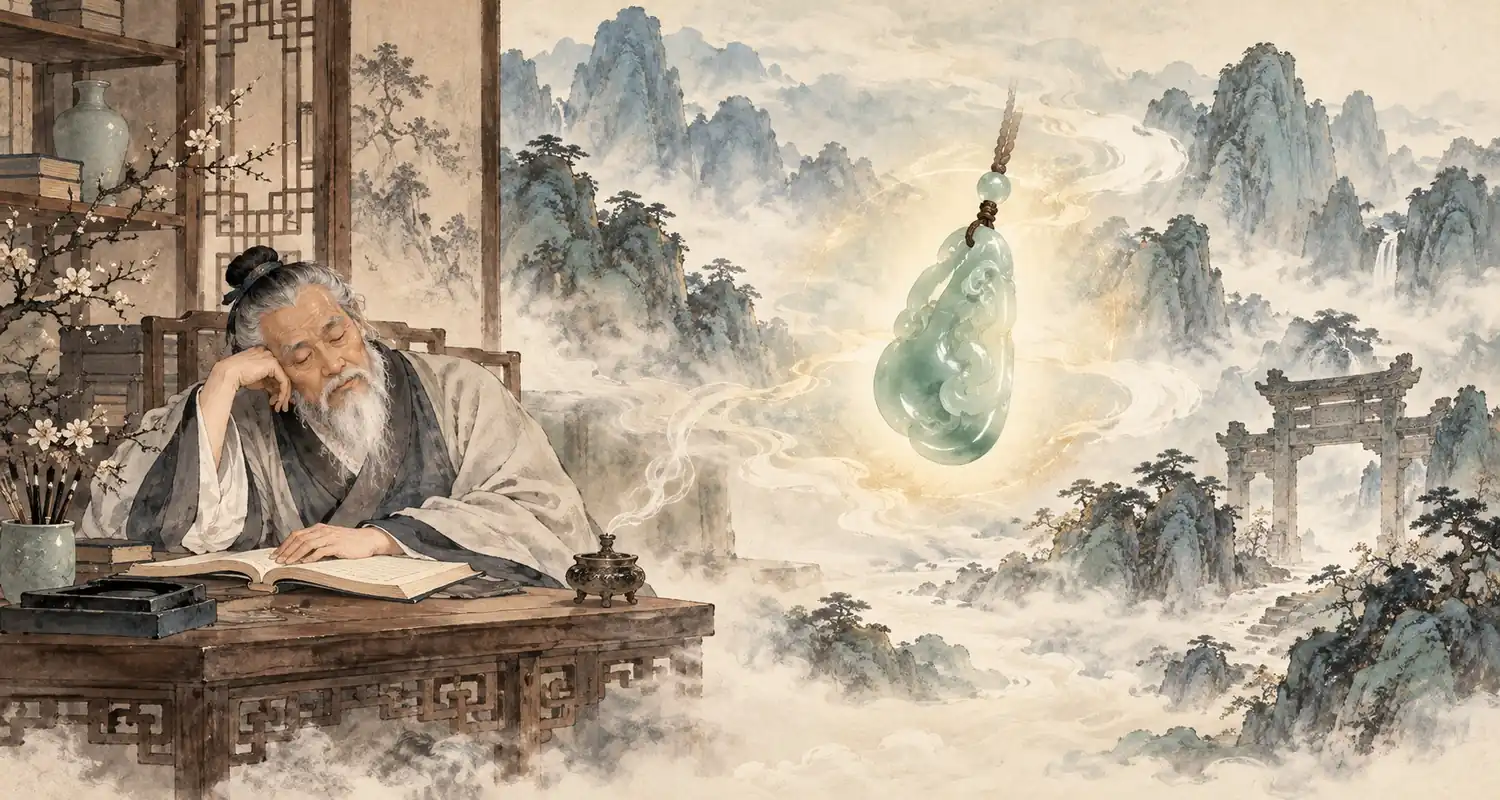
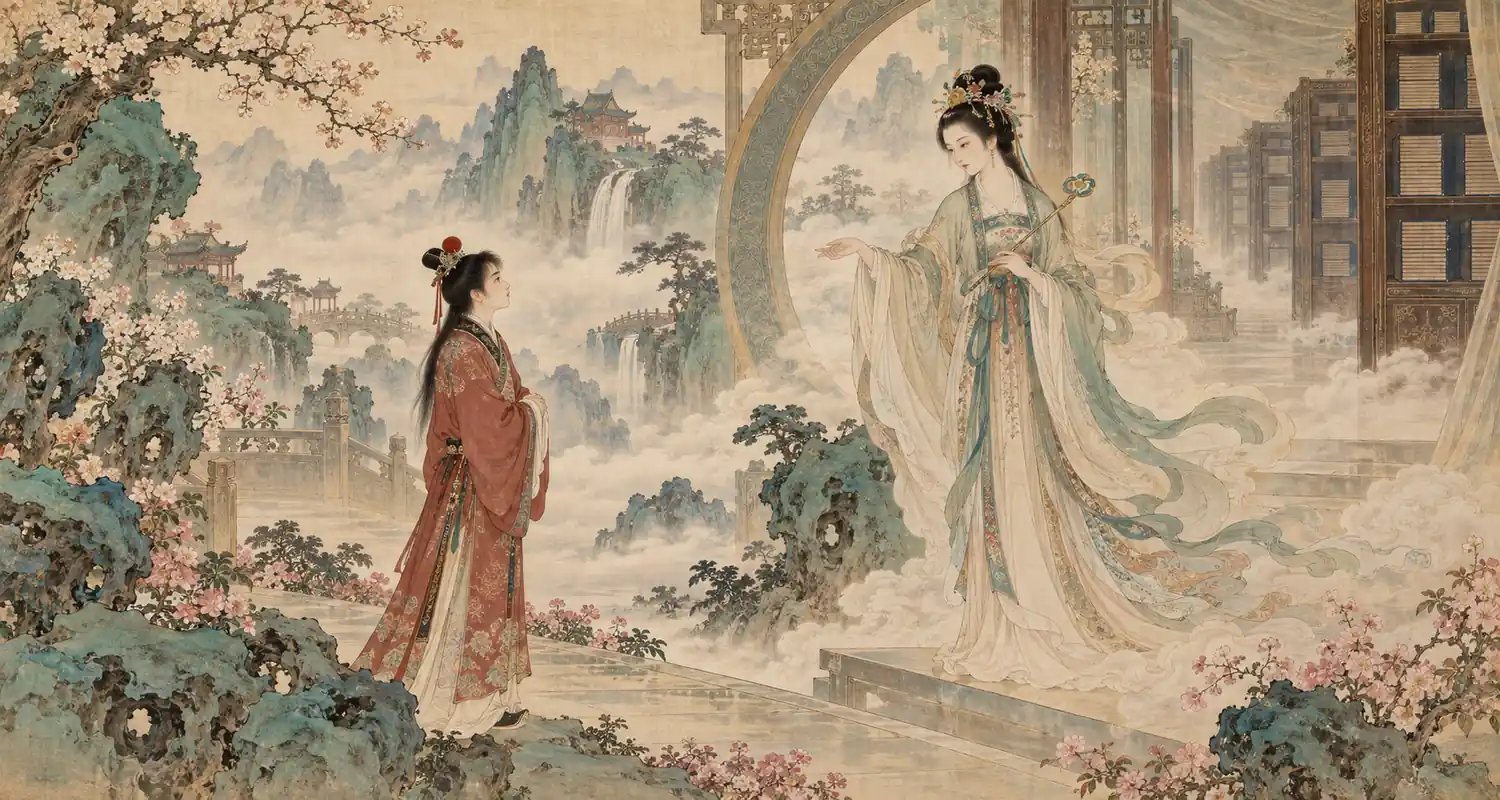
A limping Daoist appeared and offered a different kind of remedy. He brought a two-sided mirror associated with the Land of Illusion and warned Jia Rui to look only at its reverse.
On that side, Jia Rui saw a skeleton. The image forced death and the body’s fragility before him. He recoiled and turned the mirror around.
The front showed the woman he desired. Instead of accepting the warning, he returned to the attractive vision. Each return drew him further from the life the Daoist had offered to preserve.
The Surface He Chooses
Jia Rui died without breaking free from the mirror’s attraction. His grieving family blamed the object, but the story answered that its warning had been plain. He had insisted on the surface that pleased him.
The mirror brought the novel’s recurring opposition of truth and illusion into a small, unsettling object. It offered a harsh truth on one side and a seductive appearance on the other.
Xifeng’s retaliation, the clan’s exploitation, and Jia Rui’s refusal to stop all remain part of the tragedy. The ending does not make the household innocent. It leaves a world in which desire can blind one person while calculation strengthens another.
Chapter Summary
Jia Rui pursues Wang Xifeng, who tricks and humiliates him rather than accepting his advances. Illness and debt follow. A Daoist gives him a two-sided mirror with a strict warning, but he chooses its tempting surface and dies.
Character Notes
| Character | Role in This Chapter |
|---|---|
| Wang Xifeng | Jia Lian’s wife, who responds to Jia Rui’s advances with calculated traps. |
| Jia Rui | A member of the Jia clan whose obsession and illness lead to his death. |
| Qin Keqing | Jia Rong’s wife, seriously ill during the family celebration. |
| Ping’er | Xifeng’s trusted maid and confidante. |
| Jia Dairu | Jia Rui’s grandfather, responsible for his upbringing and study. |
| Jia Rong and Jia Qiang | Clan members involved in humiliating and extorting Jia Rui. |
| The limping Daoist | The figure who brings the two-sided mirror and its warning. |
Cultural Notes
- Fengyue Baojian: The mirror’s name is often rendered as a mirror of romantic desire. Its two sides contrast an attractive illusion with a disturbing truth.
- Forms of address: Jia Rui’s familiar address to Xifeng reflects clan relationships; it does not make his advances acceptable to her.
- A tragic warning: Jia Rui’s decline joins physical suffering with debt, secrecy, and obsession. The mirror offers him a last chance to confront what he has avoided.
- Truth and illusion: The mirror continues a theme introduced by the stone’s story and the Land of Illusion: appearances may conceal the consequences of attachment.